Japan Through Every Season
Japan's calendar overflows with festivals, natural phenomena, and time-honoured traditions. Filter by season to plan your perfect visit.
Spring March – May
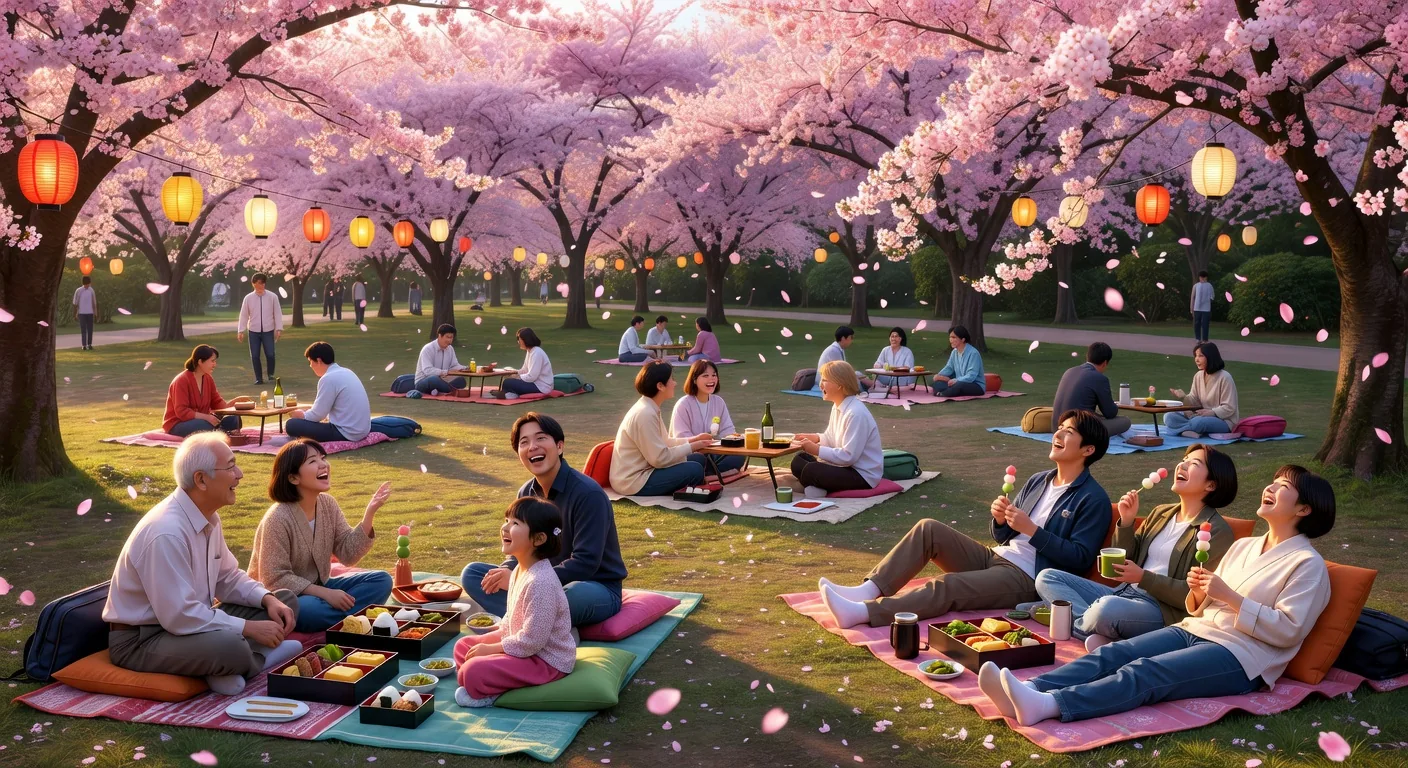
Hanami celebrations beneath blooming sakura — a cherished Japanese tradition for over 1,000 years.
Hanami (花見) — Cherry Blossom Viewing
Japan's most beloved tradition transforms parks and riversides into pink-canopied gathering places. Families and friends spread blue tarps beneath the blossoms for picnics of sake, bento, and laughter. The sakura front (sakura zensen) sweeps north from Kyushu in late March, reaching Hokkaido by late April.
Best spots: Maruyama Park (Kyoto), Shinjuku Gyoen (Tokyo), Hirosaki Castle (Aomori), Philosopher's Path (Kyoto)
Hinamatsuri (雛祭り) — Doll's Festival
Girls' Day, also known as the Peach Festival (Momo no Sekku), sees families display ornate tiered platforms (hinadan) of elaborately dressed court dolls representing the Emperor's household. The tradition wards off misfortune and celebrates daughters' health and happiness. Girls dress in kimono and eat diamond-shaped rice cakes (hishimochi).
Golden Week (ゴールデンウィーク)
Japan's longest consecutive public holiday period clusters four national holidays: Showa Day (Apr 29), Constitution Day (May 3), Greenery Day (May 4), and Children's Day (May 5). The entire nation moves — bullet trains sell out weeks in advance, temples overflow with visitors, and family destinations reach peak capacity. Book everything months ahead.
Nikko Toshogu Spring Festival
A spectacular procession of over 1,200 participants in full Edo-period costume honours the enshrinement of Tokugawa Ieyasu. Armoured samurai, archers on horseback (yabusame), and court nobles parade along Nikko's legendary cedar avenue in this UNESCO World Heritage setting.
Summer June – August
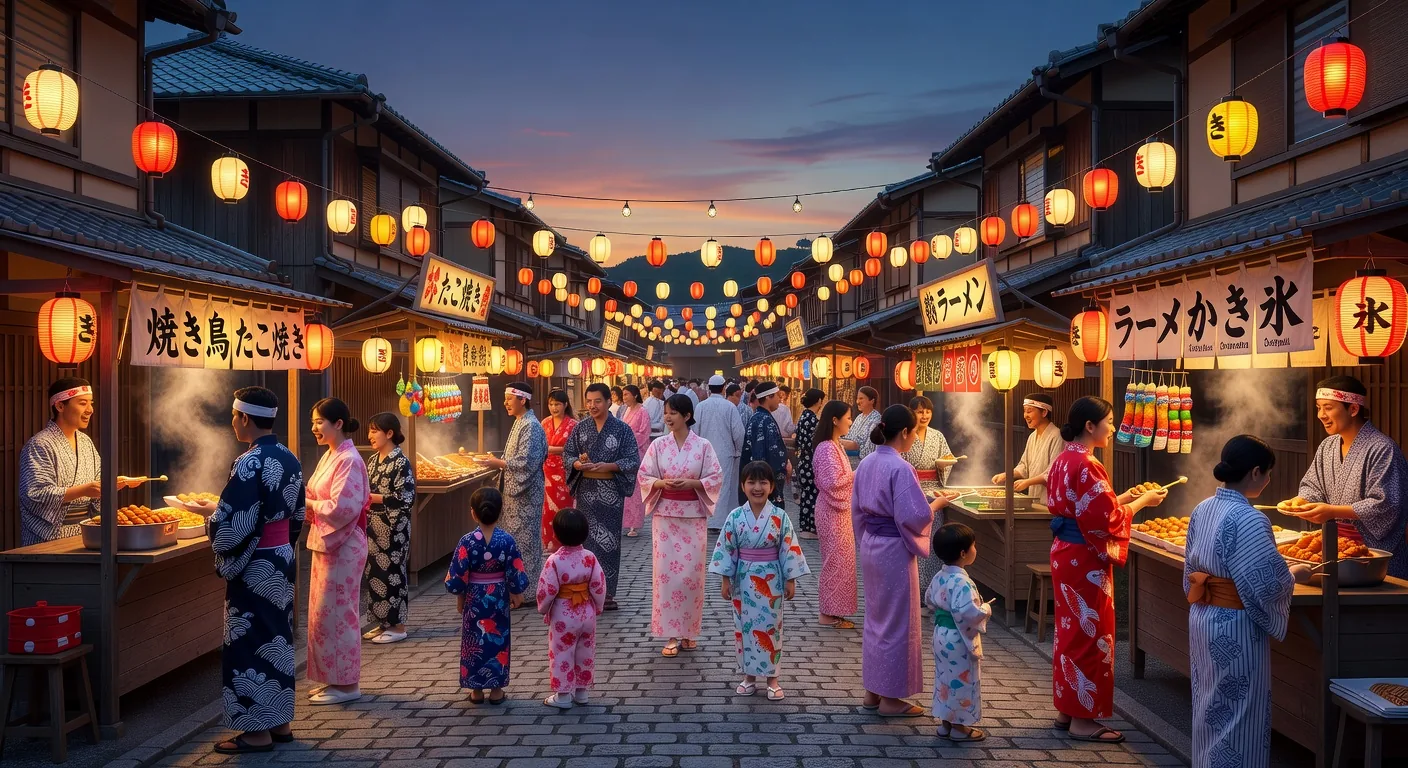
Summer matsuri bring communities together in a blaze of lanterns, yukata, and taiko drums.
Gion Matsuri (祇園祭)
Kyoto's most celebrated festival runs the entire month of July. The highlight is the Yamaboko Junko procession on July 17 and 24, featuring colossal decorated floats pulled through the city's streets to the haunting sound of festival music. Dating to 869 AD, when it was established to appease the gods during a plague epidemic.
Obon (お盆) Festival
This Buddhist festival honours the spirits of ancestors, who are believed to return to the world of the living for a brief period. Families clean graves, burn mukaebi welcoming fires, and participate in Bon Odori circle dances wearing yukata. Kyoto's Daimonji fire festival — five giant Chinese characters blazing on mountain slopes — is its most dramatic expression.
Tanabata (七夕) — Star Festival
The bittersweet legend of the Weaver Star (Vega) and the Cowherd Star (Altair), separated by the Milky Way and reunited only once a year, is celebrated by writing wishes on colourful strips of paper (tanzaku) and hanging them on bamboo branches. Sendai's Tanabata Matsuri in August is the grandest celebration, with elaborate paper decorations filling the city's shopping arcades.
Sumida River Fireworks
One of Tokyo's oldest and most spectacular hanabi (fireworks) festivals, drawing over 900,000 spectators to the Sumida River banks. Over 20,000 fireworks are launched in a two-hour display, with premium viewing spots filling up hours in advance. Spectators arrive in traditional yukata summer kimono, creating a river of colour beneath the blazing sky.
Autumn September – November
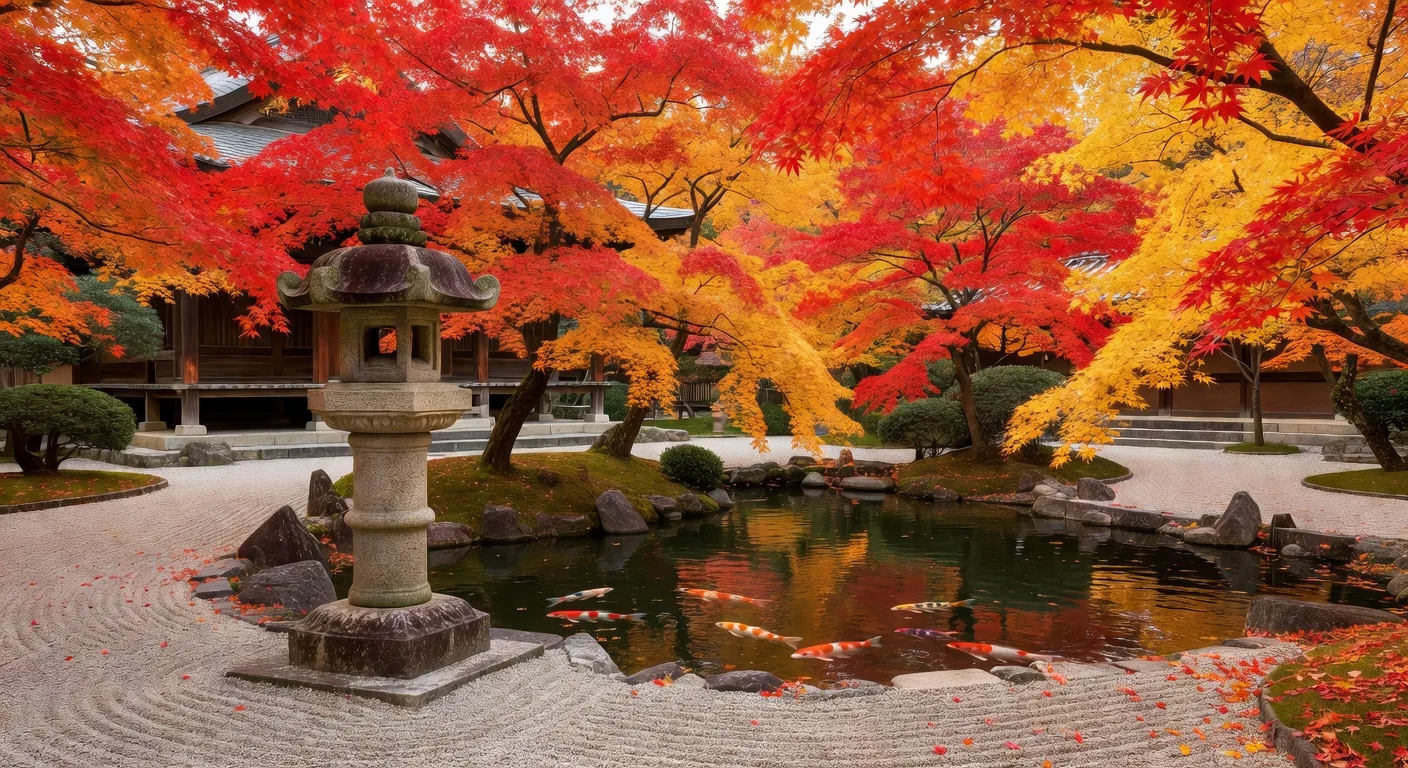
Japan's autumn koyo (maple-leaf viewing) rivals cherry blossom season in its breathtaking beauty.
Koyo (紅葉) — Autumn Foliage
Japan's autumn colour-change is celebrated with the same reverence as spring cherry blossoms. Maple leaves (momiji) ignite temple gardens in crimson, orange, and gold. The colour front (koyo zensen) descends from Hokkaido in late September to reach Kyushu by December. Nikko, Arashiyama in Kyoto, and Korankei in Aichi are legendary for their displays.
Best spots: Tofuku-ji (Kyoto), Nikko (Tochigi), Rinnoji Garden, Eikan-do Temple
Jidai Matsuri (時代祭) — Festival of Ages
Celebrating Kyoto's founding anniversary on October 22, the Festival of Ages features a magnificent procession of 2,000 participants in authentic costumes spanning 1,200 years of Japanese history. The parade begins at the Kyoto Imperial Palace and ends at Heian Jingu Shrine, stepping through eras from Meiji back to the Enryaku period.
Kurama Fire Festival (鞍馬の火祭り)
One of Kyoto's three great unusual festivals, held on the same evening as Jidai Matsuri. Villagers descend the mountain in procession carrying giant flaming torches, filling the steep streets of Kurama with dramatic, otherworldly light. The ritual invokes the kami to come down from the mountain to the shrine.
Shichi-Go-San (七五三)
On November 15, children aged seven, five, and three are dressed in formal kimono and taken to Shinto shrines to mark milestones in their growth and pray for continued health and happiness. The sight of tiny children in elaborate traditional dress filing through shrine gates is one of autumn's most charming images.
Winter December – February
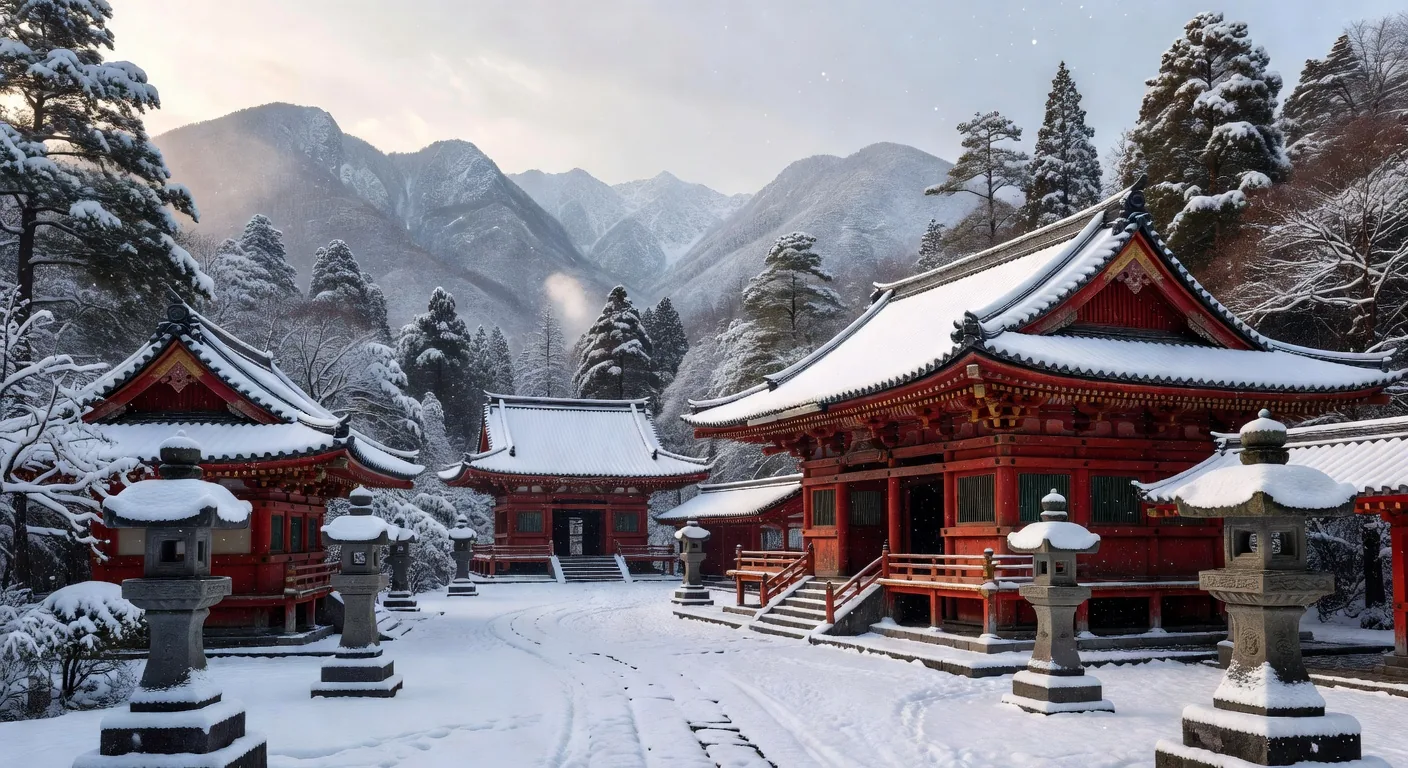
Snow transforms Japan's ancient temples into serene, otherworldly landscapes of pure white silence.
Sapporo Snow Festival (さっぽろ雪まつり)
The world's most famous snow sculpture event transforms Odori Park and Susukino into an extraordinary gallery of ice and snow sculptures, some reaching 15 metres tall. International carving teams from over 50 nations compete alongside Japanese artists. The illuminated night displays are magical. Held over one week in early February, drawing over 2 million visitors.
Hatsumode (初詣) — New Year Shrine Visit
Japan's most widely participated tradition sees over 100 million people make their first shrine or temple visit of the new year between January 1–3. Shrines sell omamori (amulets), ema (wish plaques), and arrows for luck. The Meiji Shrine in Tokyo and Naritasan Shinshoji Temple near Narita draw the largest crowds nationwide.
Winter Illuminations
Japan's winter illumination culture is high-quality. From late November through February, major parks and landmarks are transformed with millions of LED lights. Notable displays include Nabana no Sato in Mie, Shinjuku Southern Terrace in Tokyo, Kobe Luminarie (December), and Caretta Shiodome in Tokyo.
Nozawa Onsen Fire Festival (道祖神祭り)
One of Japan's three great fire festivals and a Nationally Important Intangible Folk Cultural Property. Men of the village defend a large wooden shrine from the torch-bearing crowd in a dramatic ritual marking age milestones. The 25-year-olds form the final line of defence while the 42-year-olds lead the ceremony, symbolising the passage of time and community bonds.